








Stiff hips, tight hamstrings, a cranky lower back, and a rounded upper body are common problems for people who sit a lot or train hard. The good news is you don’t need a long mobility routine to feel better. One simple movement can improve how your body moves in minutes, and that’s why the world’s greatest stretch has become a favorite in warm-ups and daily mobility plans.
This article explains what it is, how to do it safely, what it helps, and how to adjust it for your body so it’s comfortable and effective.
What Is the World’s Greatest Stretch?
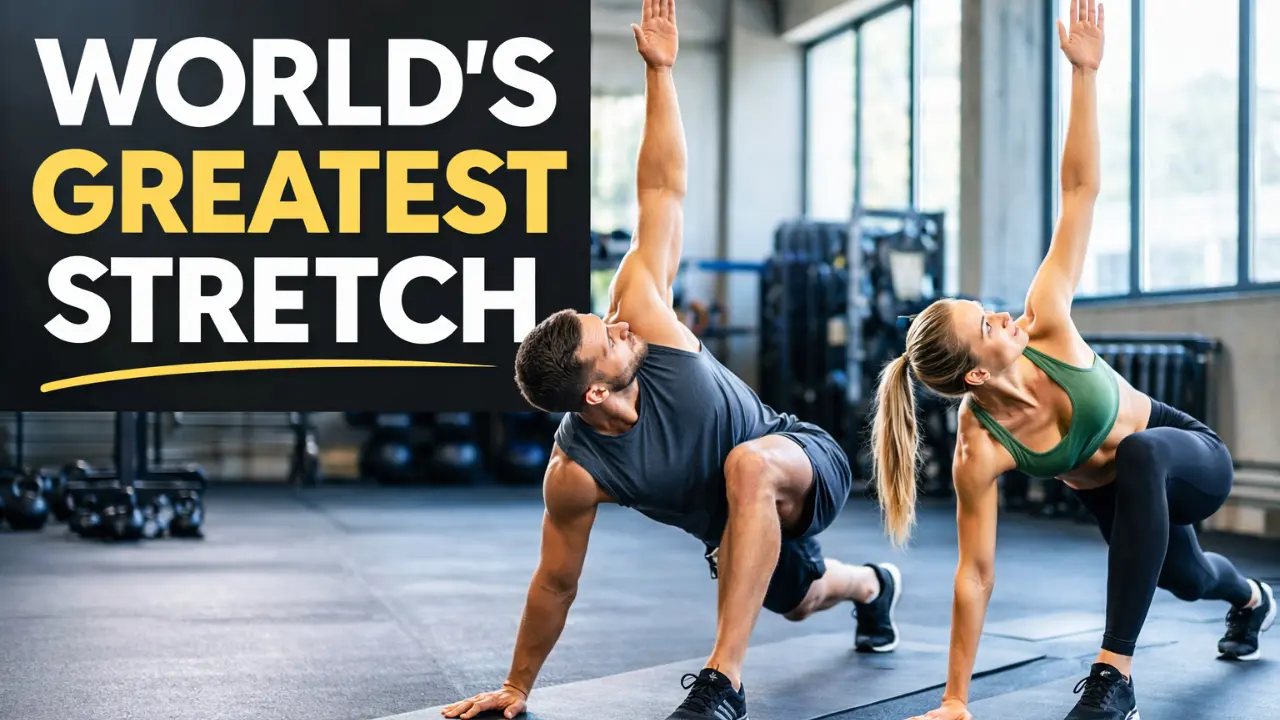
The world’s greatest stretch is a dynamic mobility move that combines a deep lunge, a hip opener, and an upper-body rotation. “Dynamic” means you’re moving through positions instead of holding one static stretch for a long time. That makes it especially useful before workouts, runs, sports, or even a long day at a desk.
Instead of targeting only one muscle, it helps multiple common trouble spots at once: hips, hamstrings, glutes, calves, upper back, chest, and shoulders. That’s the main reason it’s so popular—it gives a lot of benefits in a short amount of time.
Why This Stretch Feels So Effective
Many people think they’re tight because their muscles are “short.” In reality, tightness is often a mix of limited joint motion, weak stabilizers, and tissues that aren’t warmed up. The world’s greatest stretch works well because it improves mobility while also teaching your body control in a strong position.
It opens the front of the hips (especially if you sit often), encourages better rotation in the mid-back (which supports posture and shoulder movement), and gently loads the legs so the body feels ready to move. Done slowly, it can make walking, squatting, and bending feel smoother almost immediately.
Main Benefits for Everyday People and Athletes
When you use the world’s greatest stretch consistently, the biggest improvements usually show up in the places that affect daily comfort and training performance.
It can help you feel less stiff after sitting. It can reduce the “pull” many people feel at the front of the hips during lunges or runs. It can improve how your upper back rotates, which matters for healthy shoulders and a more upright posture. And because it’s a movement pattern, not just a hold, it fits perfectly into warm-ups for strength training, cardio, sports, and mobility work.
People also like it because it saves time. Instead of doing several separate stretches for the hips, hamstrings, and the upper back, you can do one movement that covers the most common needs.
What Muscles and Areas Does It Target?
The world’s greatest stretch works the body from the ground up.
Lower body: hip flexors (back leg), glutes, hamstrings, quads, calves, and ankles.
Core and spine: deep core stability, hip control, and rotation through the thoracic spine (mid-back).
Upper body: chest opening and shoulder mobility as you rotate and reach.
This is why it can feel like a full-body reset. It touches multiple joints—ankle, knee, hip, spine, and shoulder—without requiring equipment.
How to Do the World’s Greatest Stretch Step by Step
Use this slow, controlled version first. Speed is not the goal. A clean form makes it helpful.
- Start in a high plank with your hands under your shoulders and legs straight behind you.
- Step your right foot forward to the outside of your right hand. If you can’t reach that far yet, step forward as much as you comfortably can.
- Keep your left leg strong behind you and your hips stable. Try not to collapse into the lower back.
- Place your left hand on the floor for balance, then rotate your chest to the right and lift your right arm.
- Pause for a breath, then bring the hand down and step back to the plank.
- Repeat on the other side.
A helpful tip: think about “growing tall” through your chest during the twist. That keeps the rotation in the upper back rather than forcing it into the lower back.
Breathing Tips That Improve the Stretch
Breathing makes a big difference here. In the lunge position, inhale slowly to expand your ribs. On the exhale, rotate gently a little farther while keeping your hips stable. You’re not trying to force a deep twist—you’re teaching your body to move smoothly.
Even one calm breath per side can make the world’s greatest stretch feel deeper and more controlled.
Common Mistakes to Avoid
A few small mistakes can turn this into an uncomfortable move. Fix these, and it becomes much more effective.
Rushing the reps is the biggest issue. If you move too quickly, your body avoids the range you’re trying to improve. Another mistake is letting the front knee collapse inward, which can stress the knee and reduce hip engagement. Keep the front knee tracking in line with your toes.
Also, watch your twist. If you feel the twist mainly in the lower back, reduce the rotation and focus on lifting your chest first. Rotation should feel like it’s coming from the mid-back and ribs, not from cranking the lower spine.
Best Modifications if You’re Tight or New to Mobility
The world’s greatest stretch can be adjusted for nearly any body type or flexibility level. Use these options to make it fit you.
Knee-down version: Lower the back knee to the floor. This reduces intensity, improves balance, and makes it easier to focus on posture and breathing.
Hands elevated: If getting your hands to the floor is hard, place them on a sturdy surface, such as a bench or step. You still get the hip and upper-back benefits with less strain.
Smaller twist: If your shoulder feels uncomfortable, rotate without reaching fully overhead. You can keep the reaching arm lower and still train thoracic rotation.
Shorter stance: If you feel unstable, bring the feet a little closer together. Stability comes first—mobility improves faster when the position feels safe.
Helpful Variations for More Hip and Hamstring Mobility
Once the basic version feels comfortable, these add-ons can enhance benefits without complicating the movement.
Elbow drop hip opener: From the lunge, lower your inside elbow toward the floor near the front foot (only as far as you can control). This increases hip opening. Then return to the hand position and twist.
Hamstring rock-back: From the lunge, shift hips back and straighten the front leg, lifting the toes slightly so you feel the hamstring lengthen. Return to the lunge and then twist.
These variations make the world’s greatest stretch even more useful for runners, lifters, and anyone who feels tight in the hips and legs.
When to Use It for the Best Results
Most people get the best results in two situations: before training and during the day when stiffness builds up.
Before workouts, do 2–4 controlled reps per side as part of a warm-up. During the day, even 1–2 rounds can help your body feel less locked up, especially if you sit for long hours. If you use it daily, keep the effort moderate and focus on smooth movement rather than pushing for extreme range.
A Simple Routine You Can Follow (No Guesswork)
If you want a quick plan that works for most people:
Do 2 rounds total.
Each round: 2 slow reps per side, pausing for one deep breath at the top of the twist.
If hamstrings are tight, add one hamstring rock-back before the twist on each rep.
This routine is short, easy to repeat, and gives consistent improvement without feeling overwhelming.
Conclusion
The world’s greatest stretch is popular for a reason: it targets the areas most people struggle with—hips, hamstrings, upper back rotation, and posture—without taking much time. When you do it slowly, with steady breathing and clean form, it becomes a reliable tool for warm-ups, daily mobility, and reducing stiffness from sitting. Start with the easiest version that feels stable, then build range over time.
FAQs
How many reps of the world’s greatest stretch should I do?
Start with 2–4 slow reps per side. Quality matters more than volume, so keep it controlled and smooth.
Is the world’s greatest stretch better before or after exercise?
It’s best before exercise because it’s dynamic and prepares joints for movement. After workouts, slow it down and hold positions longer if desired.
What if I can’t step out of my hand?
Step forward as far as you comfortably can and widen your stance slightly. You can also lower the back knee to reduce intensity.
Should I feel this stretch in my lower back?
You should feel rotation mostly in the mid-back and ribs. If the lower back feels strained, reduce the twist and focus on lifting the chest.
Can beginners safely do the world’s greatest stretch?
Yes, especially with modifications like the knee-down version or hands elevated. Start gently and improve range gradually over time.