









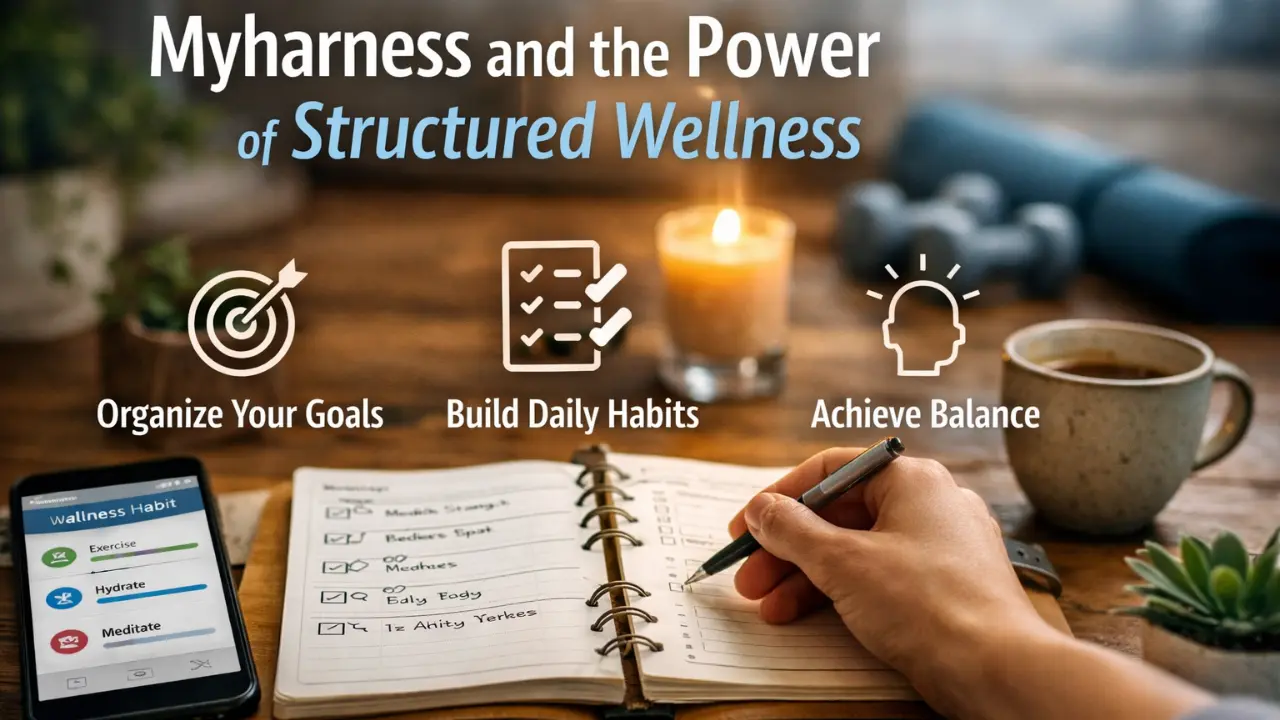
Wellness has become a crowded space. Every week there is a new routine, mindset hack, or productivity method promising better results. Yet many people still feel overwhelmed, inconsistent, and mentally tired. The reason is simple. Wellness does not fail because people lack information. It fails because daily life lacks structure. This is where myharness fits into the picture in a meaningful way.
Instead of offering another quick fix, myharness focuses on how people organize their behavior from day to day. It recognizes that mental clarity, emotional stability, and physical health all depend on predictable routines. When actions are aligned and repeated with intention, progress happens quietly and steadily.
Seeing myharness as a practical life framework
Most people already know what habits would improve their lives. They want to move more, sleep better, reduce stress, and stay consistent with work or personal goals. The difficulty is not understanding what to do. The difficulty is turning good intentions into daily action.
myharness can be understood as a framework that helps close this gap. It is built around the idea that behavior becomes easier when it is structured. When goals are connected to simple routines, they stop feeling abstract. Daily actions gain context and meaning, which makes them easier to repeat.
Rather than depending on bursts of motivation, this approach supports steady habits that survive busy days, low energy, and unexpected disruptions.
The link between structure and mental well-being
Mental well-being is often discussed in emotional terms, but structure plays a major role in how the mind feels. When priorities are unclear or constantly changing, the brain stays in a low state of stress. This shows up as restlessness, worry, or difficulty focusing.
myharness supports mental clarity by reducing uncertainty. When tasks and habits are placed into a clear system, the mind no longer has to hold everything at once. This lowers background stress and frees mental energy.
Over time, people begin to feel calmer and more grounded. They are less reactive and more intentional, even in demanding situations. This sense of stability is a key foundation for emotional health.
Consistency as a wellness skill, not a personality trait
Many people believe consistency is something you either have or you do not. In reality, consistency is supported by environment and structure. When routines are realistic, they are easier to maintain.
myharness encourages consistency by keeping daily actions simple and repeatable. Instead of pushing dramatic change, it supports small behaviors done regularly. These behaviors may seem minor at first, but they compound over time.
This kind of consistency supports better sleep patterns, more stable energy levels, and improved emotional balance. It also reduces the cycle of starting and stopping that leads to frustration and self-doubt.
Why reducing mental load improves overall health
One of the most common sources of stress today is mental overload. People constantly remember tasks, switch between responsibilities, and worry about what they might be forgetting. This constant background effort drains energy.
myharness helps by providing a single, reliable structure. When planning and tracking are externalized, the brain can rest. Focus improves, and mental fatigue decreases.
This reduction in mental load affects more than productivity. It supports better mood regulation, clearer thinking, and more effective recovery after long days. Wellness improves not by doing more, but by carrying less in the mind.
Supporting physical wellness without rigid systems
Physical health often suffers when routines are too strict or demanding. Extreme plans may work briefly but are difficult to sustain. Over time, inconsistency leads to discouragement.
myharness supports physical wellness through realistic habits. Movement, hydration, rest, and recovery are treated as part of daily structure rather than temporary challenges. This approach respects natural energy levels and promotes long-term adherence.
By focusing on repetition rather than intensity, physical progress becomes more sustainable. People are more likely to stay connected to their health when routines feel achievable.
How myharness differs from traditional productivity tools
Many productivity tools are built around output. They focus on efficiency, speed, and doing more in less time. While this can be useful, it often ignores mental health and long-term balance.
myharness takes a broader view. It prioritizes alignment instead of constant performance. Daily actions are connected to values and well-being, not just task completion.
This makes it especially useful for people who want structure without pressure. It supports productivity while respecting human limits.
Who myharness fits best
myharness is well suited for people who feel mentally scattered despite having clear goals. It works well for individuals who want order without rigidity and progress without burnout.
Professionals, creatives, and people managing multiple responsibilities often benefit most. The system provides clarity without adding complexity, which makes it easier to stay consistent in changing circumstances.
Rebuilding self-trust through simple routines
When people repeatedly abandon habits, confidence erodes. Over time, they stop trusting themselves to follow through. This affects motivation and self-image.
myharness supports self-trust by making consistency realistic. When small actions are completed regularly, confidence grows naturally. People begin to rely on their system instead of forcing discipline.
This sense of reliability strengthens emotional resilience and creates a more stable relationship with personal goals.
Conclusion
myharness represents a grounded approach to modern wellness. It emphasizes clarity, structure, and repeatable behavior rather than motivation or extremes. By organizing goals, habits, and daily actions into one practical system, it helps reduce mental overload and support sustainable well-being. Its value lies in working with human behavior, not against it. In a noisy world, myharness offers something simple but powerful: steady progress built on structure that lasts.
Frequently Asked Questions
What is myharness used for?
myharness is used to organize goals, habits, and daily actions into a clear structure that supports long-term consistency and well-being.
How does myharness help mental wellness?
It reduces mental overload and decision fatigue by providing clarity and predictable routines.
Is myharness only focused on productivity?
No, it supports productivity while prioritizing balance, mental clarity, and sustainable living.
Can myharness support physical health habits?
Yes, it encourages repeatable habits like movement and recovery without extreme routines.
Who benefits most from myharness?
People seeking structure, clarity, and long-term balance across work, health, and daily life benefit most.