









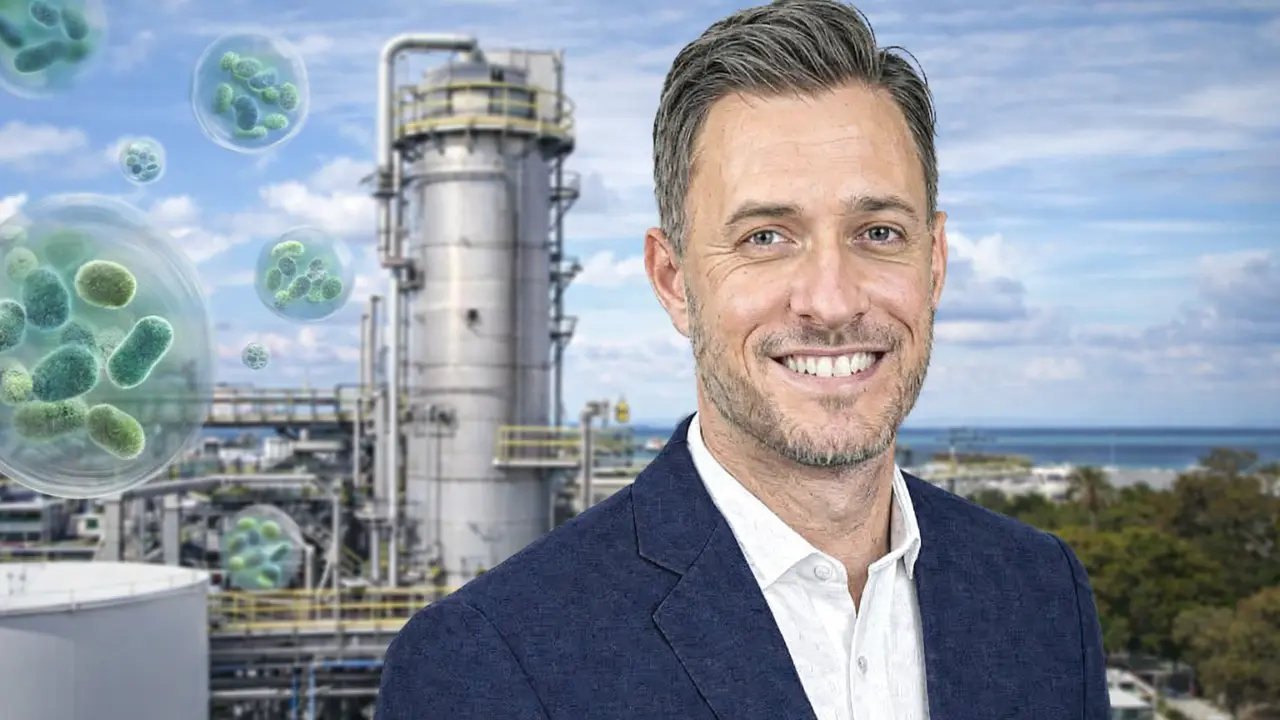
If you follow climate innovation, you’ve probably noticed a shift in the conversation. It’s no longer only about reducing emissions. Increasingly, it’s also about what we can build with the carbon that already exists in the atmosphere and industrial systems. One name that comes up in this space is mark herrema, an entrepreneur known for pushing the idea that greenhouse gases can be treated not just as a problem, but as a raw material. His work sits at the intersection of science, manufacturing, and sustainability, where breakthroughs are measured not only in lab results but in real products people can touch, use, and replace in their daily lives.
Who Is Mark Herrema?
mark herrema is best known as the co-founder and leader behind a materials company focused on carbon utilization. In simple terms, his story is about taking an environmental liability—greenhouse gases—and finding a way to convert them into useful materials at scale. That goal sounds ambitious because it is. But it’s also exactly the type of ambition the climate sector needs: solutions that can move beyond pilot projects and become part of mainstream supply chains.
What makes mark herrema particularly interesting as a public figure is how his work blends long-term scientific development with the realities of business. Climate technology often fails when the science is strong, but the economics don’t work. His approach, as seen through the product and company narrative associated with him, is rooted in building something that can compete in the real world: quality, performance, and cost all matter.
The Big Idea: Turning Emissions Into Materials
The core concept linked to mark herrema is carbon conversion—transforming carbon-rich gases into a solid material that can be manufactured into products. This is sometimes described as carbon capture and utilization, but the key distinction is utilization. Capturing carbon is only half the equation; the bigger question is what you do with it afterward. Storing it underground can be valuable, but turning it into something useful creates a stronger business case and can speed up adoption.
In practical terms, his innovation aims to produce a polymer-like material that can replace certain plastics. That matters because plastics are everywhere, and traditional plastic production relies on fossil fuels. If a material derived from greenhouse gases performs well in real applications, it has the potential to reduce reliance on petroleum-based inputs while also creating a market incentive to reduce emissions.
AirCarbon and the Push for a Plastic Alternative
One of the most discussed material outcomes associated with mark herrema is a product commonly referred to as AirCarbon. The name itself signals the idea: carbon in the air becomes the building block for something tangible. For readers who aren’t deep into chemistry, what matters is the promise—materials that can be used across consumer and industrial categories while aiming to reduce environmental impact.
A plastic alternative has to do more than sound sustainable. It must handle stress, heat, and wear. It must be manufacturable in large volumes. It must integrate into existing production lines without forcing every company to rebuild its entire process. The reason this category draws attention is that it tries to meet those requirements while also reframing the carbon problem. Instead of only paying to manage emissions, industries can potentially feed certain emissions into a production pipeline that creates value.
How the Process Is Commonly Described
While the exact details of any proprietary system are not always public, the general process described in relation to mark herrema often includes nature-inspired chemistry and biological conversion pathways. The high-level story is that natural processes in the environment already turn carbon into useful compounds. Industrializing a similar concept is the challenge: building controlled systems that can reliably convert gas inputs into consistent material outputs.
This is where the climate-tech conversation becomes more practical. It’s not enough to show that a reaction can happen. The system must run continuously, maintain quality control, and hit production targets. Any scaling effort must also manage energy use, because a carbon solution that consumes excessive energy can quickly lose its climate benefit. The more serious the technology, the more it depends on engineering details that most people never see.
Why This Matters for Industry and Everyday Consumers
The reason mark herrema’s work resonates is that it connects climate action to products people recognize. Many sustainability messages remain abstract: emissions, percentages, targets, timelines. Materials innovation makes it concrete. If carbon-derived materials can be used in packaging, textiles, durable goods, or manufacturing inputs, then the climate story becomes a supply chain story.
For businesses, the appeal is straightforward. Materials represent cost and risk. If a company can secure a reliable material that supports sustainability goals without sacrificing performance, it strengthens both brand and operations. For consumers, the value is equally clear: choices that don’t require major lifestyle changes. If the product works and feels normal, adoption becomes easier.
Recognition, Public Profile, and Credibility Signals
The climate space is crowded, and many claims are made without lasting follow-through. That’s why public credibility signals matter. mark herrema has been associated with well-known innovation and climate recognition lists, which helps explain why his name appears in discussions beyond niche scientific circles. Recognition alone doesn’t prove a technology is perfect, but it often indicates a certain level of seriousness, external vetting, and visibility.
For readers evaluating climate leaders, it’s useful to focus on a few grounded questions: Is the work tied to real production? Are there products and partnerships? Is the company building manufacturing capacity? Does the technology have a clear market fit? The public narrative around mark herrema tends to align with these commercial realities, which is a major reason he’s frequently mentioned in climate materials conversations.
Challenges and Criticisms in Carbon-Derived Materials
No climate technology moves forward without friction. Carbon utilization is especially complex because it sits between environmental urgency and industrial constraints. One challenge is scale. Even a successful material must produce enough volume to matter. Another is lifecycle impact. The environmental value depends on how inputs are sourced, how energy is used, how the material performs over time, and what happens at end-of-life.
There’s also the adoption challenge. Large manufacturers don’t switch materials easily. They worry about quality variance, warranty risk, consumer perception, and supply stability. For a climate material to win, it must be reliable and predictable—two qualities that take time, testing, and investment. The broader lesson is that innovation isn’t only invention; it’s the long grind of turning a concept into something repeatable and widely accepted.
Leadership Approach and What Entrepreneurs Can Learn
If you look at the type of mission associated with mark herrema, a few leadership themes stand out. First, patience. Materials innovation often takes years, not months. Second, systems thinking. You can’t build a climate material without thinking through manufacturing, logistics, certification, and partnerships. Third, clarity of mission. The climate sector rewards founders who can explain complex science in a way that makes sense to investors, customers, and everyday people.
For entrepreneurs, the takeaway is not to chase hype. The strongest businesses in climate tech are often the ones building quietly, solving hard engineering problems, and designing products that meet real market needs. The work linked to mark herrema reflects that kind of long-term execution, where success depends on discipline as much as vision.
What the Future Could Look Like
The long-term promise of carbon-derived materials is bigger than any single company. If the model proves scalable and cost-competitive, it can create a new category where emissions become feedstock. That shift could influence how governments design incentives, how corporations set sustainability targets, and how consumers think about product impact.
At the same time, it’s realistic to expect that progress will come in stages: specific product categories first, then broader adoption as manufacturing grows and supply chains mature. The most important indicator will be whether carbon-derived materials can continue to improve performance and price while maintaining a credible environmental benefit. If that happens, the type of work associated with mark herrema may become a blueprint for how climate innovation can move from inspiration to infrastructure.
Conclusion
mark herrema is often discussed because his work represents a practical, product-driven response to the climate challenge. The idea is straightforward but powerful: turn greenhouse gases into useful materials that can compete in the market. Whether you’re a consumer curious about sustainable products or a business leader exploring supply chain options, this category of innovation is worth watching. It suggests that climate solutions don’t always have to feel like sacrifice; sometimes they can look like better materials, smarter manufacturing, and a new way of thinking about what waste really is.
FAQs
What is mark herrema known for?
mark herrema is known for leadership in climate-focused materials innovation, especially around converting greenhouse gases into usable products. His public profile is tied to building real-world applications rather than purely theoretical ideas.
What is the main concept behind his work?
The central concept is carbon utilization: using greenhouse-gas inputs to create materials that can replace certain petroleum-based plastics. The goal is to reduce reliance on fossil resources while creating value from emissions.
Why are carbon-derived materials important?
They matter because they connect climate action to manufacturing and everyday products. If materials can be produced at scale and used widely, they can reduce emissions impact across multiple industries.
Is this technology the same as carbon capture?
It’s related, but not identical. Carbon capture focuses on collecting emissions; utilization focuses on converting that captured carbon into valuable materials, creating a stronger economic incentive.
What should readers watch for going forward?
Watch for scale, partnerships, and product adoption. The biggest signal of success is whether carbon-derived materials can meet performance needs and become a stable part of mainstream supply chains.