








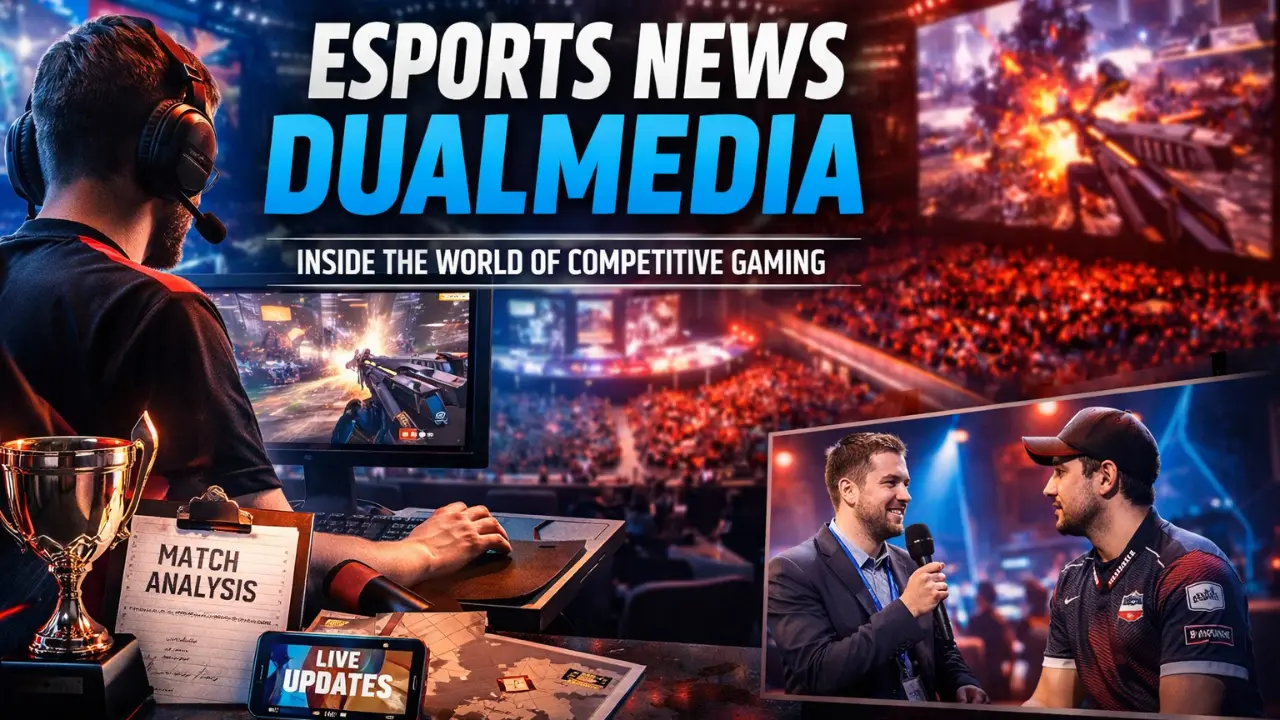
The esports world moves at a pace that can feel impossible to track. One day it’s a surprise roster move, the next it’s a meta shift after a patch, and by the weekend a new underdog team is suddenly the headline story. For fans, players, coaches, and even content creators, staying current is no longer optional—it’s part of the competitive lifestyle. That’s where esports news dualmedia fits in: a search term many people use when they want quick access to tournament updates, game-specific reporting, and deeper analysis that goes beyond surface-level recap culture.
In this guide, you’ll learn what esports news dualmedia generally refers to, why people look for it, what kind of coverage readers expect, and how to use esports reporting in a way that actually improves your understanding of competitive games. Whether you follow Valorant, Fortnite, League of Legends-style metas, or mobile esports, the goal is the same: find information that’s accurate, relevant, and useful.
What “esports news dualmedia” typically means
When people search esports news dualmedia, they’re usually looking for a specific type of esports coverage—content that feels connected to the real competitive scene rather than written from a distance. Readers who use this keyword often want updates that include context: not just who won, but how they won, what strategies mattered, and what shifts might happen next.
This topic also tends to attract audiences who want consistent publishing, clear writing, and game-specific categories. Instead of one general “gaming news” stream, they prefer sections focused on particular titles, tournament ecosystems, and player development. In short, esports news dualmedia searches often represent a demand for coverage that treats esports seriously, like a sport with coaching systems, scouting talent, tactical depth, and long-term team identity.
Why competitive players care about reliable esports reporting
For casual viewers, esports news can be entertainment. For competitive players, it can be a training tool. A single update about a patch, agent balance, weapon adjustment, or map change can alter how ranked play feels—and how scrims should be approached. If you play in leagues, tournaments, or even high-level ladders, the difference between “heard a rumor” and “read a verified breakdown” matters.
This is one reason esports news dualmedia has become a popular keyword pattern: people aren’t only searching for headlines; they’re searching for signals. They want to know what matters right now. They want information that saves time, avoids misinformation, and helps them make decisions—what to practice, which strategies to test, and how to interpret the direction of a game’s competitive scene.
What makes esports coverage valuable (not just noisy)
Not all esports reporting delivers the same value. Some sites chase speed, others chase clicks, and some focus on opinions without enough supporting detail. High-quality esports coverage usually includes several key elements:
First, it separates facts from commentary. Readers should instantly understand what’s confirmed, what’s likely, and what’s speculation. Second, it prioritizes relevance: a patch note summary should highlight competitive impact, not just list changes. Third, it respects the audience. Esports readers are often informed and passionate; they want clarity, not filler.
When people search esports news dualmedia, they often expect this level of structure: clean reporting, tactical insights, and a consistent editorial voice. It’s the difference between content that you skim once and forget, and content you return to because it helps you think like a competitor.
Real-time updates, roster moves, and why timing matters
In esports, timing is everything. A roster change posted at the wrong moment can spread confusion. A rushed patch interpretation can create false narratives. And a tournament result without context can mislead viewers about a team’s true form.
That’s why real-time updates are only useful when they’re paired with verification. The most helpful reporting tends to follow a rhythm: break the news, confirm the details, then explain the impact. For example, if a team replaces an in-game leader, the real story isn’t only the name—it’s how leadership affects map control, mid-round calls, role flexibility, and the team’s long-term identity. Readers searching esports news dualmedia typically want that second layer: the “what happens next” angle.
Game-specific coverage: why one-size-fits-all esports news fails
Esports isn’t one sport. Each title has different competitive rules, patch cycles, formats, and skill expressions. A tactical shooter requires different analysis than a battle royale. A MOBA meta evolves differently than a mobile strategy title. When coverage becomes too broad, it loses usefulness.
A strong esports news experience often includes dedicated reporting lanes such as:
Valorant: agent compositions, map preferences, economy decisions, and role shifts
Fortnite: format changes, rotation trends, endgame tactics, and consistency across lobbies
Mobile esports: balance updates, regional scenes, and how small adjustments reshape matchups
Because of these differences, esports news dualmedia searches are usually intent-driven. People aren’t looking for “anything esports.” They’re often looking for the game they care about, written in a way that matches how competitors talk and think.
Strategy breakdowns that actually help you improve
The most underrated benefit of esports journalism is learning. When an article explains why a strategy worked—rather than simply naming it—you gain a mental framework. You start spotting patterns. You understand why teams stack a site at a particular timing window, why they prioritize certain utility, or why they choose aggression in one round and patience in another.
Good breakdowns translate high-level play into readable insights. They use examples without overwhelming the reader. They show cause and effect: how a small decision early in a round influences a win condition later. For many readers, esports news dualmedia represents the hope that esports coverage can be more than entertainment—it can be a tool for growth.
If you’re an aspiring player, focus on analysis pieces that explain:
How teams adapt after losing a key round
How map control is created and maintained
How meta changes influence team compositions
How pressure affects decision-making in late-game moments
These are the details that move you from “watching” to “understanding.”
Interviews and player stories: the human side of competition
Esports is built on performance, but it’s powered by people. Interviews and player-focused stories matter because they add context that match footage can’t show. Training routines, mental preparation, team culture, role conflicts, burnout, recovery, and career planning are all part of the ecosystem.
When written well, interviews provide more than quotes. They reveal how pro teams practice, how coaches shape strategy, how players handle high expectations, and why certain teams evolve faster than others. This style of storytelling also helps newer fans connect with the scene. It turns esports from a list of names into a living community.
Readers who repeatedly search esports news dualmedia often want this balance: hard news and tactical coverage, but also stories that make the scene feel real and relatable.
Coverage of emerging regions and overlooked teams
Mainstream attention often clusters around top-tier leagues and star organizations. But esports grows through its edges: regional tournaments, semi-pro circuits, academy teams, and underrepresented scenes where talent is rising quietly. When coverage includes these spaces, it helps the entire ecosystem.
Highlighting emerging regions does a few powerful things:
It gives visibility to players who deserve a spotlight
It helps scouts and organizers identify rising talent
It broadens the audience’s understanding of global competition
It prevents esports narratives from becoming repetitive
This is another reason the keyword esports news dualmedia is used by fans who want something fresher than the same headline cycle. They want discovery, not just repetition.
How to use esports news effectively (without getting overwhelmed)
Esports information overload is real. The solution isn’t reading everything—it’s reading strategically.
Use this simple approach:
- Pick two or three game categories you truly follow and ignore the rest.
- Prioritize verified updates, patch impact summaries, and tournament previews.
- Save deeper analysis for weekends or practice breaks.
- Compare opinions, but treat confirmed reporting as your foundation.
- Track trends over time: one match can be a fluke; patterns tell the real story.
If your goal is to stay sharp competitively, treat esports news like training nutrition: you want quality and consistency, not endless snacking. Searches like esports news dualmedia often come from people trying to build that healthier information routine.
Conclusion
Esports is no longer a niche hobby—it’s a global competitive culture with constant change. To keep up, you need coverage that respects your time and helps you understand what’s happening beneath the highlights. That’s why esports news dualmedia has become a common search: readers want esports reporting that feels timely, game-specific, and genuinely useful.
When you follow esports news with the right mindset, it becomes more than updates. It becomes a way to learn how pros think, how metas evolve, and how competitive scenes grow. Whether you’re a player aiming to improve, a fan who wants deeper insight, or a creator who needs accurate context, better esports coverage makes the entire experience richer.
FAQs
What is esports news dualmedia?
It usually refers to esports reporting that focuses on competitive updates, match analysis, and game-specific coverage. People use the keyword when they want structured esports information rather than general gaming news.
Is esports news dualmedia useful for players, not just fans?
Yes. Competitive players can use esports reporting to understand meta shifts, patch impacts, and strategic trends. The best analysis can even guide practice priorities.
How often should I read esports news to stay updated?
A short daily check for verified updates is enough for most people. Save long analysis for when you have time, like weekends or after scrims.
What type of esports articles are the most helpful?
Patch impact explainers, tournament previews, and match breakdowns with clear “why it worked” reasoning are usually the most valuable. Interviews can also reveal training and mindset insights.
Can esports news help me improve faster in ranked play?
It can, if you apply what you learn. Focus on strategy concepts, meta changes, and role trends, then test them deliberately in practice rather than copying blindly.